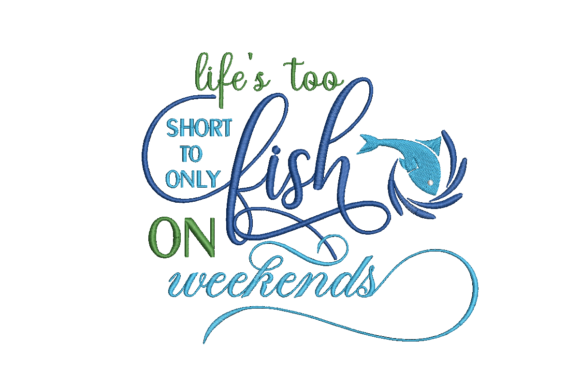
Review: Life’s Too Short to Fish on Weekends Design
As a designer who has spent countless hours staring at digitizing software and even more time watching needles punch through fabric, I have learned that not all machine embroidery design files are created equal. Some are technically proficient but soulless; others are charming but poorly constructed for actual production. When I first loaded the Life s Too Short to Fish on Weekends file into my viewer, I was looking for more than just cute text. I wanted to know if this design could hold up in a real-world embroidery project, specifically for clients who demand durability and clarity.
The immediate impression is one of relaxed humor. The phrase captures a specific mood that resonates deeply with outdoor enthusiasts. It is not just about fishing; it is about prioritizing leisure and passion over the grind. For an Etsy seller or a craft business owner, this emotional connection is vital. However, sentiment does not stitch itself. The layout needs to be balanced, and the lettering must be legible after the fabric shrinks slightly under the tension of the hoop. In this case, the design feels approachable, suggesting it would work well for casual wear rather than formal attire.
Real-World Application and Fabric Choice
To truly evaluate this design, I moved beyond the screen and into the studio. I decided to test it on a mid-weight cotton canvas tote bag, a popular item for small shop product lines. The goal was to create a durable handmade product that could withstand grocery runs and beach trips. The theme fits perfectly within the Camping and outdoor lifestyle niche, making it an ideal candidate for gear that sees regular use.
When stitching onto textured fabrics like canvas or denim, the behavior of the stitch density becomes critical. If the digits are too dense, the fabric puckers; if they are too sparse, the backing shows through. With Life s Too Short to Fish on Weekends, I noticed the design relies on a clean structure that likely utilizes a mix of satin stitch for borders or smaller elements and fill stitch for larger areas. This combination is essential for maintaining definition without creating a stiff, cardboard-like feel on the finished product.
I also considered how this would look on a sweatshirt embroidery project. Fleece and French terry are forgiving fabrics, but they can swallow small details. Because this design features a clear, bold statement, it stands out well against the plush texture of a hoodie. For custom apparel businesses, this means fewer customer complaints about illegibility. It is a safe bet for gifts that need to make an immediate visual impact.
Navigating Technical Challenges
While the design is described as fun and easy to stitch, experienced embroiderers know that "easy" is relative. There are specific scenarios where you must exercise caution. For instance, if you are planning to use this on a curved surface like a cap, you need to ensure the hoop size accommodates the full width of the text without distortion. Caps require precise stabilization, and any long horizontal text can warp if not backed correctly.
Another consideration is the choice of thread colors. The design’s elegance depends heavily on contrast. On dark fabrics, a light metallic or bright white thread will pop, enhancing readability. On light fabrics, deep blues or forest greens tie into the fishing theme while providing necessary definition. I always recommend testing the design in black and white mockups first. If the design loses its shape without color, it may rely too heavily on shading rather than structural stitching. Fortunately, this phrase-based design appears to rely on strong outlines, which is a positive sign for versatility.
Be mindful of thin fabric or stretchy materials. Without proper stabilizer, the pull of the stitches can distort the letters, turning a witty quote into a confusing mess. For delicate items like baby clothes or lightweight tees, a cut-away stabilizer might be overkill, but a high-quality tear-away or mesh stabilizer is non-negotiable. Always test on scrap fabric first. This step saves time, thread, and frustration, ensuring that your personalized gift or commercial item looks professional.
Commercial Viability and Brand Consistency
For digital product sellers and those offering commercial embroidery services, the value of a design lies in its adaptability. Does Life s Too Short to Fish on Weekends fit into a broader brand aesthetic? Yes, particularly for brands focused on relaxation, nature, and hobbyist lifestyles. It works well as a standalone piece on a tote bag design or as part of a larger collection of outdoor-themed design assets.
Customer trust is built on consistency. If a buyer orders an embroidered patch or a kitchen towel with this design, they expect crisp edges and no loose threads. The description notes that the design is high-quality, which suggests optimized pathing to minimize jumps and trims. This efficiency reduces production time, a crucial factor for small business owners scaling their operations. Faster stitching means higher throughput and better profit margins.
However, before listing this as a printable mockup or selling finished items, you must verify the license terms. Not all digital embroidery file purchases include commercial rights. Check the provider’s guidelines to ensure you are compliant. Using a design incorrectly can lead to legal issues that far outweigh the cost of the file. Assuming the license permits it, this design is a strong contender for holiday gifts, Father’s Day promotions, or retirement presents for avid anglers.
Final Designer Notes
In summary, Life s Too Short to Fish on Weekends is a solid addition to any embroiderer’s library. It balances humor with technical simplicity, making it accessible for beginners yet reliable for professionals. Remember to check the specific file formats provided to ensure compatibility with your machine. Whether you are creating a baby embroidery item for a nephew or a bulk order of holiday embroidery gifts for a corporate client, this design offers flexibility.
- Always test stitch on similar fabric weight before starting the final product.
- Use high-contrast thread colors to maximize readability on textured materials.
- Confirm hoop size requirements to avoid cropping the text.
- Verify commercial usage rights before selling finished goods.
- Consider the end-use: durable goods like bags and hats benefit most from this bold style.
By treating this applique design or standard stitch file with the respect it deserves—proper stabilization, careful thread selection, and thoughtful placement—you can create products that not only look gorgeous but also stand the test of time. It is a reminder that in both fishing and embroidery, patience and preparation yield the best results.